
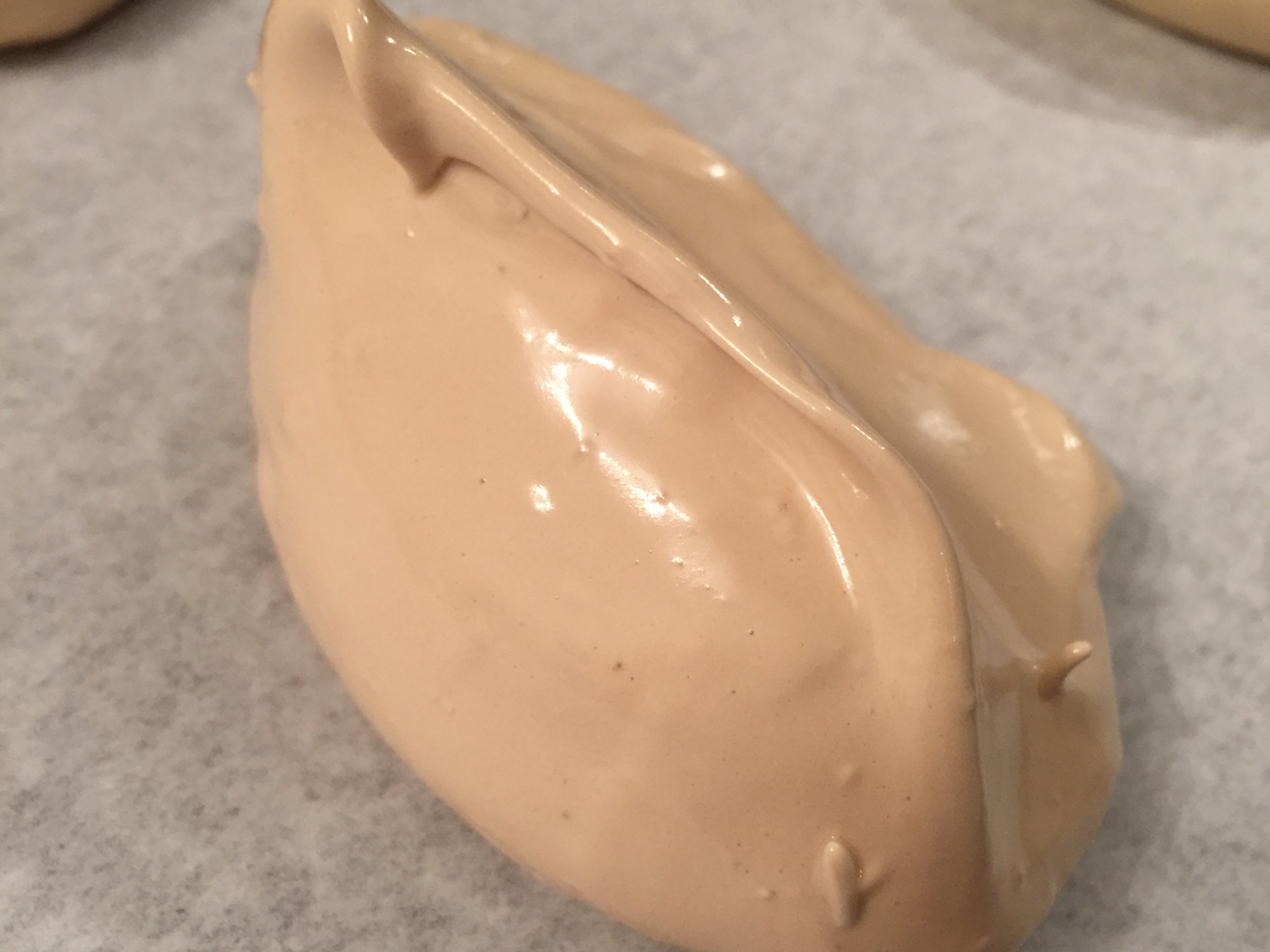
Ideally you need to make meringues at least 24hrs before you need them, at the very least you need to let them cool completely in the oven (guess a minimum of 6 hours). They will keep up to a week in a tin once made, changing from chewy to crunchier over the week.
Don’t store them in plastic as this makes them sweat and go soft – I did this by mistake and attempted to rescue them by re-baking them. I discovered this is probably how Crunchie (or honeycomb) is made – perfectly edible and an OK substitute in my Autumn Eton Mess recipe but definitely not meringue!
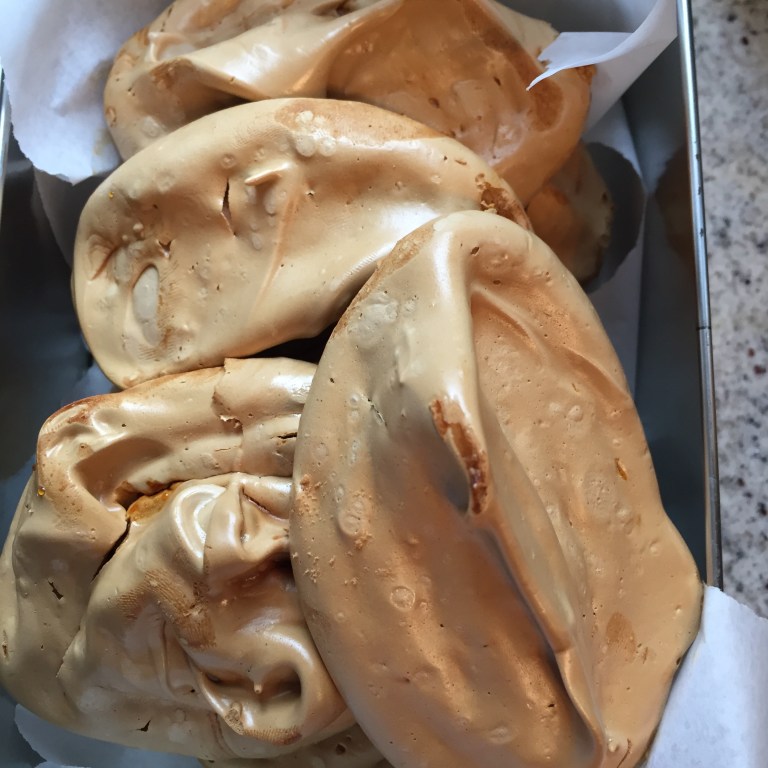
(The second time I made this recipe I realised that the honey seems to make these a naturally soft meringue. Having discovered the honeycomb trick first time round, I did it again with the leftovers from the Eton Mess and they went down a treat – cut them into bite sized pieces before the second bake – they are super sticky and will clog your teeth so need to be pre-portioned. Lightly dust in semolina to store to minimise how much they stick together.
If you want a more traditional meringue texture, maybe try adding a capful of white wine vinegar to make them a bit chewier? Yes, vinegar. Trust me, it reacts with the egg white to set it – think poached eggs.)
Makes about 4 Meringues
Equipment
- Electric Whisk (or a lot of elbow grease!!)
Ingredients
| Egg Whites | 2 | |
| Brown Sugar | 100 | grams |
| Honey (optional) | 2 | dessert spoons |
Method
- Heat the oven to 170c.
- Whisk the egg whites in, to use Delia’s words, a ‘scrupulously clean’ bowl until you get the infamous soft peaks.
- Continue to whisk, add the sugar one spoonful at a time – only adding the next spoonful when the last has been combined into the mixture. Be patient and keep whisking until the mixture truly holds its shape (chefs would say you should be able to turn the bowl upside down without it coming out, I’ve never dared put mine to this level of test).
- Gently fold through the honey – it might be worth warming it slightly to make it easier to distribute evenly.
- Spoon onto a tray lined with grease proof paper. You want quite crunchy meringues so make individual portion sizes – about a generous tablespoon per portion. Allow a good few centimetres between each as they will spread slightly (or a lot if your mixture is on the loose side!).
- Place in the hot oven but immediately reduce the temperature to 140c. The hot start helps to get a crispy outer shell to form, keeping the shape of the meringue while the inside sets. Cook for around 30-40 minutes (depending on the size of your meringues) – until there is no real wobble if you press lightly on the shell.
- Turn off the oven and leave them inside until completely cold – reduces the risk of them cracking from cooling too quickly.
- I’ve made these a couple of times and as noted above they do make a very sticky meringue so don’t be put off if you have to carefully peel them from the greaseproof paper. If you are making an Eton-Mess style dessert you’ll realise at this stage why it is such a forgiving use of meringues – crack them to your heart’s content and no one will ever know.
 Save-it Sarah's Off Piste Recipes